
We’re going out on a limb and say that Australia has the most efficient (if not the best) healthcare system in the world. What makes this effective is the funding model (albeit with divided political opinions) which dynamically and economically services people across all demographics and financial standing.
Regulated by the Department of Health and funded by both state and federal entities, the Australian health care is a two pronged system made up of the public and private health sector.
The public system is being taken care by Medicare which enable them access to GP (general practitioners) and hospital services. It provides financial assistance so that Australians can have low cost, if not free, access to medical and hospital care.
Under this, the government predominantly subsidizes the cost of medicines via the Pharmaceutical Benefits Scheme, a program of the government created for that purpose.
The Private system provides access to a private treatment in either a public or private hospital or specialist services.
But there’s a catch. To allow them to private facilities, they need first to purchase a private health insurance, which levies a 1% tax on them. This takes off the burden and frees more room for the lower and middle class citizens to take advantage of the public system.
 What Services Do I Have Access To?
The health care system enables citizens to have access on a wide range of services. In public hospitals, these include acute and moderately-acute care services, geriatric care for old people, palliative care for patients with serious illness, care for people with terminal illnesses, and emergency services.

Public health insurance is funded b by the government through Medicare. Instituted in 1984 and is administered by the federal government, it is additionally financed by a 2% tax levy on citizens earning above a threshold amount, and another 1% on high income earners without private health insurance. The rest is backed by the government.
If eligible, Medicare entitles citizens to a free treatment in a public hospital by general practitioners, free treatments by specialists if a GP refers the patient to a care plan, and claim benefits and payments for
 What Do Private Insurance Have to Offer?
Currently, only 46% of Australians have private health insurance which can be purchased from any of the private providers. Unlike its public counterpart, private insurance allows a patent to choose where they can be treated and by which doctor. These private practitioners are mainly out-of-hospital medical services. A third of total government expenses on health care goes to private insurance.
 The federal government shoulders the following expenses:
2. Other concessions or benefits the patient may be entitled to
3. Further benefits if they reach the Extended Medicare safety net general threshold, of which it will cover either 80% of the out of pocket costs or the benefit cap, whichever is the lower amount.
The remainder of the costs is then shouldered by the patient. Unless he/she goes for a bulk billing.
 The patient may have an option to have a provider bill Medicare directly for any medical or health service the patient receives, this is called bulk billing. In this type of arrangement, two things happen:
If a practitioner accepts bulk billing for a service, he/she undertakes to accept the related Medicare benefit as complete payment for the service. He/she cannot raise additional charges for that service.
Australia is a land of unlimited opportunities and a great quality of life. The fact that it remains one of the most popular immigration destinations in the world (at 6.5 million and counting) is never surprising.
But many are still bewildered, surprised, and disappointed that the country they landed on isn’t what they really imagined. The continent is physically detached from the rest of the world by the oceans which is the reason why it has a culture, political system, and a way of life different from the norm.
The periods of adjustments can be long and arduous. But in the end, it’s all worth it. The question is, do you have what it takes? Here are the top seven major challenges that immigrants face here.
 If you’re the type of person who frowns upon bills stealing your hard-earned money, Australia is not for you. As we have established before, it’s quite pricey to live here.
The continent is home to one of the most expensive transport systems in the world, and the only non-European among the list. The Internet isn’t cheap either, and you have a data cap to make things harder.
Everyday expenses from groceries to rent to restaurant to electricity and gas are also pricier than in most develop countries (like in the United States).
Well if everything is costly, at least getting your own house can be affordable right? No.

This might be the biggest challenge among the citizens down under, locals and expatriates alike.
Getting your own house is the best decision you’ll ever make in your adult life, but the prices and taxes here make that nigh impossible. Australia, along with New Zealand, is deemed to have the least affordable housing markets in the world. While the global housing value rises by an average of three percent, Australia tops that by a whopping 12 percent.
And it doesn’t help that homeowners here constantly over-valuate their properties by 47% to 57%, especially those who hail from Sydney, Brisbane, and Adeliede. Basically, the factors are working hand and hand here, and it is crushing the property buyers beneath as a result.

If you hate the sun, here it hates you more.
You see, the Australia is very much like Europe, if Europe was ten times closer to the sun. And it doesn't help that the country has a great outdoor lifestyle. Here, sunscreen is your bff, and you have to slap it on every few hours like your life depends on it.
Well actually, it does! The country has one of the highest case of skin cancer in the world. Protecting yourself from the sun is a must so you can continue living a good life here while elbowing the big C in the jaw.
And if you think the night is a safer time for you, it’s not.

Climate and temperature in Australia can be erratic, meaning daytime can be ultimately warm, and night time unbearably cold. This can get worse during spring, where evening temperatures can plummet down to 8° C from a 27° C during morning.
And we’re talking about the cities here, where it is relatively warmer. Outback and suburban climates can be much, much worse,
But nothing can prepare you for winter night. In Liverpool and Richmond, for example, winter evenings can dip below 2° C and even 0° C. This makes the temperature disparity between morning and evening even worse.
 Sure, getting out of the employment wheel and starting your own business is great career move, but the road can be tougher in Australia, especially if you need to hire manpower.
At $9.54 per hour, Aussies enjoy the highest minimum wage in the world (the very same reason people from all over the world converge here to look for opportunities). But if you’re still establishing your start-up, that means your employees will be getting a lion’s share of your capital. On the upside, you can be well sure you’ll be getting the best people.

If your idea of Christmas is a snow-covered yard, snow-ball fights, building snowmen, and anything snow-related, you’ll be in for a disappointment/surprise/ disappointing surprise. Yuletide here comes in the beginning of the summer holidays. Santa Clause might as well arrive in a surf board.
As opposed to a white, cold Christmas, the holiday here is more like your average Miami Bay vacation. But with lifeguards on Santa shirts and hats. And a decorated pine tree in the middle of the shore. Yes, it’s Christmas like you’ve never seen before.
It is warmer, the sun’s high, and it’s beach season. Forget the snowmen, sand castles are the December norm here.
 It is general knowledge (huge thanks to the Internet) that Australia is home to the most bizarre and deadliest creatures in the planet. From the salt-water crocodile to the box jelly fish to bull sharks, cassowaries, and eastern brown snakes.
These creatures mostly inhabit the Outback and the sea, though. Meaning if you stay at home, you’ll be out of these crawlers’ reach, right?
Well, not really. As the country has been suffering from pest problems ever since. Rabbits in Australia have been damaging crops and decimating other species since the early 20th Century. The government has been fighting invasive feral bees for long now. And then there are the spiders. The Sydney funnel web, mouse soider, and the Redback spiders alone are known to wander in backyards and swimming pools and even hide inside shoes and clothes. So it is always advised to check things before wearing them.
As we have told you before, Australia was a land both of challenges and opportunities, and it still is right now. But that doesn’t mean the costs outweigh the benefits, check out Top 10 Reasons to Live in Australia and see the beautiful side of living here.
Guess what? Forty years of Mad Max movies lied. Australia isn’t just a hunk of sand and dune that seem to stretch to forever (also, there are no steam punk motorcycle-riders). As far as climates go, you might say Australia has the entire world packed in this heap of land.
Since it is huge, the climate vastly vary throughout. The greater part of the continent has a dessert or semi-arid temperature. The north has a tropical savanna and grasslands climate, while the near east coast is covered in snow, especially Mt. Buller in the winter season.
Yes, there’s a climate for everybody’s preference, whether you just want to surf the seas, or explore the rain forests, or trek the Outback. The largest island country in the world has something for you.

OK, here’s what Mad Max got right, well sort of. The Australian Outback is a large area of land in the middle of the continent with an arid to semi-arid temperature. Because of its size, this climate in never consistent throughout. It has wet, lush areas as well as dry, barren ones.
Though it is habitable, very few live here (the cast of the Survivors had to be paid to stay here and endure for a few months). But it is famous among trekkers, adventurers, and off-road explorers who want to stay away from civilization for a while.
Now, let’s get to the places you actually want to live in.
 Sydney
Australia’s capital isn’t just vastly uptown, it has a very friendly weather as well. It has an abundant sunshine with temperate, humid climate spread throughout the year.
And since it is a coastal city, cool, afternoon sea breezes counters the rather quite steamy temperature during summer days. Creating a balanced and refreshing feel. This is evident in the people flocking the ocean playground for water sports, yachting, or just swimming.
All in all, Sydney has a very cordial and agreeable weather all year round.

Sydney might have a friendly climate, but it isn’t the friendliest. That honor belongs to Adelaide.
Once voted as the eighth best in the world, Adelaide enjoys a Mediterranean climate with a mildly warm, bright weather throughout the year. During winter where the sky is cloudier than the usual, rain fall comes in, making the season not too unbearably cold.
Adelaide has the lowest humidity among the Australian cities, therefore avoiding the sweltering heat that is the pitfall of summer season in the country.
 Brisbane
Bearing a tropical climate, Brisbane is generally sunny throughout the year, with balmy to flush temperature, partly because of the high humidity.
This heat can be quite dank and steamy during December, January, and February, the three hottest months of the year, with an overarching gray, cloudy sky above.
During summer is when swarming rain and bewildering thunderstorms go abound, with blue skies as norm. Yeah, quite ironic.
 Melbourne
At 2,200 hours per year, Melbourne enjoys an abundant amount of sunshine, with many people finding the climate very pleasant all year round. Partly because it has lower sea temperature around the city compared to others.
The only downside is the fickle fluctuations of the weather in every season, and the fact that during winter, Melbourne receives lower amount of sun.
 Perth
PerthAmong the Australian cities, Perth receives the most amount of sunshine – at 3,200 hours annually. In fact, it can get intensely sunny here. During summer, it can reach up to 40 degrees here, so locking yourself up with the AC on full blast might be the best decision here.
What balances everything is the “Fremantle Doctor,” a cooling afternoon sea breeze that brings forth comfort in the sweltering heat. Though at times this can be hazardous and blow sand around. This doctor is quite moody, so to say.
During winter season, there is little rain, but with still plenty of sun.
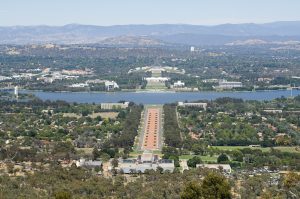
Canberra isn’t really far from Sydney, but the difference in temperature is vast, partly because of its locations and elevation.
Situated inland and with an elevation of 9,000 feet above sea level, it enjoys a rather continental climate, with large seasonal temperature differences.
During summer, it relishes a cooler climate because of the lower humidity. When winter comes in, frosts and winter fog, occurrences that are rare in the neighbor city, are quite common here. All year round, nigh time brings about rapid fall in the temperature. Yep, blankets are your best friends here.
As we have established before, Australia’s roots itself is founded on migration and immigration. It’s a turbulent history involving people from the far reaches of the world converging into a large heap of mysterious land to establish one of the best countries on Earth.
Here’s an abridged version of that history.
Along the way, we will also squash some myths, too. And explain why, despite its efforts for diversity, the country is still mostly white people.
The first ancestors of the indigenous Australians arrived in the continent 40,000 to 70,000 years ago. Since Australia is detached from the rest of the Earth’s landmass, these ancient settlers must have arrived here when glaciers still joined the continent to Tasmania and New Guinea.
The aborigines established what could be one of the oldest cultural and social traditions on Earth, developed a hunter-gatherer lifestyle, learned to harvest from the sea, and formed spiritual practices that will take the rest of the world many millenia to catch up like cremation and animist religion.
British explorer Captain James Cook wasn't the first Westerner to land ashore Australia (he was the eighth), but he made the most profound impact to the southern continent.
Seventeen years after his first landfall in 1770, Cook was heralded by the British Empire to establish a penal colony here. This was the time when the American Revolutionary was still raging on, prompting the Empire to slowly lose its resources and needed replacement, setting its sight on the newfound land.
Now, you might have heard, this colony is home to Britain’s most violent murderers and traitors and that modern Australians are the descendants of these criminals. Let us crush the myth here.
While they may be branded as “criminals,” these people’s only infractions range from “stealing a piece of bread” to “pickpocketing a wallet.” These were poor, unemployed, exploited, and underfed people (again, because of the US’ war with the Brits) whose hunger caused them to break a few laws and now were needed to be exiled because the prison spaces were rapidly decreasing. And Australia was their chosen destination.
In that same year, the colony of Botany Bay (now Sydney) was established, and years later, the New South Wales and Van Diemen’s Land.
But of course, this transition wasn't easy, as the settlers were in constant clash with the indigenous tribes, which they see as barbaric, primitive, and uneducated. Since the Brits have far more superior technology and weapons, the aborigines often got the end of this long, painful, and violent stick. Racism, exploitation, and intolerance was very rampant.
In fact, many indigenous groups today believe that Australia Day, being celebrated every January 26th to commemorate Cooks landing, should be called Invasion Day, to embody and remind the present generation of the bloodshed and affliction the aborigines went through on this turbulent part of history.
The convicts made significant efforts in developing the harsh and unproductive land into a fertile one. In a few years, they were able to pay their debts and gained freedom, establishing families, business, and even companies. Because of this, more and more migrants came to Australia to look for opportunities and ride the wave of its economic upswing. By 1840s, exiling convicts to the country was finally stopped, as the land slowly became a peaceful colony.
It didn't help that in the beginning of 1850s, gold rushes started occurring in some parts of the continent. Businesses boomed more, more migrants came in, and the population grew exponentially.
This ushered in a new transition from Colonial self-government to Federacy to Democracy. In the New Year of 1901, the country saw itself as a united nation, composed of the six major colonial countries. And calls for equal rights and representation grew more and heeded upon.
By population, Australia is currently 92% white (European), despite its constant effort to abolish racism and push forth diversity. This is because of the White Australia Policy.
In 1901, it was decided that the country would only allow immigrants from UK and other English-speaking countries, and exclude Asian, African, and Pacific islands settlers. This was partly to eradicate competition from the Chinese, who in gold rush periods, came to Australia in large numbers to participate and most often got the lion’s share of the economic prosperity.
This policy wasn’t tore down until between 1949 and 1956.
After suffering major setbacks from the two World Wars and the Great Depression, the government encouraged immigration from other nations, warning that the country should “populate or perish.”
With the new immigration polices rolled in, Australia began to enjoy significant economic prosperities between 1950s and 60s, especially in the housing and manufacturing sectors. This ushered in a newfound boom in the suburban living.
In the early 50s, alliances were formed with the United States and United Kingdoms, ironically the nations that spurned out Australia’s history and laid the ground to its economic rise.
This economic expansion plus steady stream of skilled immigrants pouring in continued to become the frameworks of the country’s development. A nation built from the aggregates of the many people who took the leap to find opportunities, and in the 21st Century continuous to grow on the same aspects of these events.
The cost of living down under can be either pricier or more reasonable depending on which part of the country or the type of economy you came from. The mining boom in Australia brought forth stronger dollar value and higher economic upswing, resulting in fears of higher rents, over-priced food, and skyrocketing bill prices, usually driving away potential expatiates and immigrants.
But how much does it really take to live in Australia? We broke the down the numbers (and the rumors) here.
(You may convert the costs to your currency here.)
Cooking your food is always the most economical way for self-nourishment. Groceries for one to two people ranges from AU$300 to AU$800 a month. This includes the basic necessities like chicken, eggs, milk, cheese, tomatoes, apples, bread, and a few bottles of wine, beer and soda.
Of course, dining out from time to time can expand this cost. If you are fancy, a three-course meal for two persons in a mid-range restaurant can mount up to AU$80, while dining at a less pricey café can take you at a lower AU$18. McDonalds, always the most inexpensive eat out alternative, can take you only AU$10 for each meal.
Rent prices will always vary depending on your area of residence and the type of housing. If you are a student living near the campus, rent costs AU$320 to AU$1000 a month, while boarding schools offer them at AU$10,000 to AU$20,000 a year.
Sharing an apartment amounts AU$280 to AU$1000 a month, while home staying (in which you reside in a home of a local family) costs AU$440 to AU$1,080. With gas, electricity, phone and internet service ranging from AU$140 to AU$300 a month.
Living in furnished accommodations is another story. In normal areas, monthly dues for a 45 square-meter fully furnished place can place around AU$1,750, while an 85 square-meter apartment can cost AU$3,300. In expensive areas, this price can double. A 45 square-meter apartment can reach up to AU$2,500 while the 85 square-meter ones can worth AU$4,000. Other utilities and services can range from AU$190 to AU$200.
Unless you’re going for the tailored variety, dressing decently and comfortably in Australia doesn’t take much.
A Geoffey Beene long sleeve button front shirt costs AU$60 to AU$90, or you can take it up a notch and go for the Tommy Hilfiger brand which will cost you AU$120 to AU$130. A pair of Levis 501 jeans (or any similar variety) has a price tag of AU$100 to AU$110. While a pair of men’s leather business shoes rates at AU$130 to AU$160.
For the ladies, a summer dress from a high street commercial retailer (H and M, Zara, etc.) is just at around AU$70. While a pair of Nike or Adidas sneaks hovers around AU$133 to AU$145.
Roaming around the country is quite convenient and affordable because of its efficient transport system. Going by train costs AU$130 for a monthly ticket pass (or AU$4 for a one-way ticket). If you want a more comfortable option (without dragging your things and ruining your suit), taxi cabs are a great way to move around. Flag down rate is at AU$4 with AU$2.50 for every kilometer.
If you think commuting is not for you, a brand new 2015 Toyota Camry (or any likewise car) will cost around AU$29,000. Or you can settle for a used one (used car dealership in Australia is reliable and undergoes good quality control), for a mere AU$18,000. Gasoline is at AU$1.35 per litter.
Work here can be challenging at best, so you have to look and actually be healthy in order to function efficiently. For those sickly days, a box of antibiotics costs around AU$15, while Tylenol, Coldrex and other cold medicines hovers at AU$10. A quick visit to a private physician rates at around AU$63. To keep pushing the healthy lifestyle effort, you can get a gym membership, too which will land you at $92 a month.
For your toiletries, a 50 ml deodorant roll-on costs AU$5.30, while a 400ml hair shampoo and a tube of toothpaste is at around AU$6 and AU$4.10, respectively. Four rolls of toilet paper costs AU$3.15. And since you (or your guy) need to constantly look good and well-prepped, a standard men’s haircut costs AU$25.
All work and no play is not a very good way of living. You need to go out and unwind from time to time.
A general admission ticket to Australian Football League, the most famous sport in the continent, costs only around $25, though this price can change right up to game day. If you are not into sports, going for theater is another option, which will take you AU$237 for two tickets. Seeing a movie lands you at around AU$37 for two.
For bar crawling, a pint of beer costs AU$7 and a cocktail drink is at AU$16. Going for a cappuccino afterwards costs AU$4.12. A pack of Marlboro cigarettes costs AU$24.
Last year, the Australian economy spiked up by 3% on the heels of the impending mining boom end, further proving that the lucky country’s financial system is still the well-oiled machinery that it was, and can sustain almost any economic downturn.
And in an age where migration is a matter of survival, Australia is still one of the most popular choices to settle and retire, as shown by its increasing number of migrants.
So, what does the Land Down Under haveto offer? Here are ten of them:
Let’s admit it, when deciding on a new country to settle in, job opportunity comes high on the list. When it comes to this, Australia never disappoints.
At below 5%, it has one of the lowest unemployment rates in the world. It provides one of the highest minimum wages (even for the casual jobs) and is in constant need of a wide range of skills and specialization to support its ever growing economy.
The 2015 spike isn’t the first time the country endured an economic threat, either. It is in fact one of the very few countries that walked away almost unscathed during the global financial crisis that plunged the western world (mostly Europe) in a revolving door or economic slowdowns and declines.
Majority of Australians are considered middle class, largely due to its meritocratic philosophy, providing jobs to the young and old, in almost every strata of the society.
It’s very nice to settle in a country’s financial hotspot, where you have access to the best the city can offer. But most of the time, as the quality of living gets more lucrative, the crowd follows. Leading to a huge of people competing over smaller spaces, whether it is residential space, commercial centers, or even the cafeteria!
At three people per square kilometer, Australia is the 3rd least dense country in the world. And this still holds true for its major cities (no, we won’t ask you to settle in the Outback). Even if its financial, entertainment, and cultural hotspots continue to thrive, there are still a lot of spaces to move, a lot of freedom to explore, and more places to roam. It never gets crowded nor boring here.
The country’s history itself is rooted in mass migration and immigration from all over the world, making it a perfect haven for any outsiders. Today, it is a paragon of diversity, with one out of every four Australians being born outside the country, and with almost half of them having a parent who is born overseas.
If you will be a foreigner in Australia, have no worries. Because you will also be walking among other foreigners. You will not be judged by your nationality nor skin color but through your skills, work ability, and the capacity to get along with people.
And it also helps that the citizens are collectively taking the effort to battle any remnants of racism and are pushing forth diversity, as everybody recognizes that multiculturalism is what makes the country a better place to live in.
They love diversity so much, they even have a holiday for it: Harmony Day being celebrated every 21st of March.
Having a good job and a lot of nice people around means nothing if you know you can’t walk down the streets during the night without fearing for your life. Australia has taken care of that.
At only 1.1 felonies committed for every 100,000 people, it has one of the lowest crime rates in the world. And while the population is steadily booming, it never curbed the efforts to combat crime. In fact, crime rates are declining as well. And homicide and robbery is even the least you can worry about, the highest number of infraction here are limited to public disorder offences, the type of felony where mostly nobody gets hurt.
This significantly low crime rate is the result of the continuous efforts of the police, sheriffs and bailiffs who constantly patrol and safe guard the population, as well as the citizens’ altruistic attitude towards their fellows, natural-borne and foreigners alike.
As far as the livable regions are concerned, Australia has the Goldilocks climate: neither too hot nor too cold.
During the summer season, it sports a mild to tropical temperature, making it a top destination for those trying to escape the freezing climate of the Northern Hemisphere. During its autumn to winter months, it provides a clear to cool condition, but still with plenty of sunshine.
Because of this moderately warm climate, moving here means you will have fewer stress, more time outdoors, be more physically active, and be safe from the dangers of extreme weather like hypothermia or heat wave, as what always happen in other parts of the world.
A better job and a better quality of life. It is a win-win situation here.
With the combined death of 7.8 million every year, lung, respiratory, and pulmonary diseases may as well be the top global killer we are dealing with these days, surpassing heart illnesses and stroke by a small margin. All of these are caused by air pollution, a major peril among most under-developed and still-developing countries.
But not in Australia. At a pollutant concentration of 8 µg/m3, it has one of the cleanest air in the world. And this number even lower in cities like Melbourne, Illawarra, Geelong, Sydney, Lower Hunter, and Traralgon, all of which hovers at around 5 µg/m3. This mean the residence in the entire continent has healthier cardiovascular and respiratory health, warding off possibilities of acute lung diseases, asthma, lung cancer, and yes, stroke and heart diseases.
With much of the world already developed or still developing, a completely reliable healthcare is still largely the holy grail of good governance. Except here in Australia. Because making sure having a virtually pure air to breathe is still not enough for the government, they also made health care an integral part of their policy for thirty years.
One of the best ranked in the world in terms of health, health equality, responsiveness, responsiveness equality, and fair financial contribution, it offers a two-fold system of public and private health insurances, with the more affluent citizens being encouraged to opt for the private system by levying a 1% tax increase if they ever chose to go otherwise, freeing more room for the middle and lower class population to take advantage of the public system.
For a long time now, Australia has been one of the three most popular destinations for international students (the other two being US and UK).
And why not? The country has some of the most globally recognized universities whose graduates are highly sought after in various fields. These schools offer a diversified range of degrees, trainings, and vocational courses to students who can freely choose which one would best cater to their needs.
And as far technology is concerned, the programs are constantly in the forefront of today’s advancing world. Students have access to most impressive scientific research, data collection, and educational resources available. There aren't many places better than this.
Australia has some of the finest tourist attractions in the world, nature-borne or man-made. And one with the most extreme ranges.
Trek the desserts of the Australian Outback or go skiing on Mt. Buller (yes, in the same continent!). Bewilder at the Sydney Harbor or explore the Great Barrier Reef. Hike the King’s Canyon, trek the Queensland forests, get amazed at the Sea Life Sydney Aquarium, visit the penguins of Phillip Island, dine in the restaurants of Melbourne, conquer the Blue Mountains, go wine tasting at Claire and Barossa Valleys, or just drive along the Whitehaven Beach. There’s just so many places to visit and so many things to do.
All these wealth of advantages and benefits combined result to happier, less-stressed, and healthier citizens. And the numbers aren’t lying either.
Australia has been praised as one of the happiest countries in the world, with the citizens completely satisfied as far as life expectancy, generosity, social support, freedom, and lack of corruption are concerned.
Not to mention, the country is also one of the three healthiest nations, with life expectancy, causes of death, proportion of young people who smoke, the number of people with raised cholesterol and the number of immunizations factored in. These also lead to Australia being the least-stressed country in the world.
All of these perks, frills, and assets in one beautiful continent from down under.
Quality of life is about the happiness and comfort experienced by an individual. It is often used as a shorthand for measuring how good one feels about one’s life. There are formal procedures for calculating this measure that includes factors such as economic, social, physical, political, and spiritual well-being.
Australia is well-known for being one of the best places to live in the world. Known as “the lucky country”, 5 of Australia’s cities are in the top 37 of the most liveable cities on earth as reported by Mercer’s report 2015. Australia ranks as top #10 on the World’s Happiness Report as of 2014. Australia has also been known to excel in many areas including political, social, environment, health. Along with the temperate climates, Australians pride themselves as being reliable and honest.
World Happiness Report 2015 (https://worldhappiness.report/wp-content/uploads/sites/2/2015/04/WHR15_Sep15.pdf)
OECD Better Life Index (https://www.oecdbetterlifeindex.org/countries/australia/)
Political-Social
Australia has a fair, harmonious, and stable government. The Australian government is the 6th democracy established in the world. The people’s voice plays a large and influential role to the parties and policies in place. The parliament consists of a lower and upper house. The key role of the government is to benefit Australians. Australians are ranked #1 for having the highest civil engagement in its democracy. Having a low ranking for corruption, Australia’s system believes in giving everyone a fair go.
According to the OECD Better Life Index, 93% of citizens participate in elections which is the highest in the world and much more than the average of 68%. The World Economic Forum’s 2014 – 2015 Global Competitiveness Report also reaffirms that Australia ranks 19th in the world for the institutions that support economic growth. The Transparency International’s ‘2014 Corruption Perceptions Index’ indicates that Australia ranks 11th in the world for being the least corrupt country.
Economic
Australia is a competitive and open free-trade market. Growth industries in Australia include software and technology, medical research, construction, online business start-ups, finance and wealth management. There are much skill shortages in the Australian labour market which provides many job opportunities for both professional and trade occupations. The average household disposable income is USD 31,588 per year as opposed to the average of USD 25,908 for first world countries according to OECD Better Life Index. Giving Australians more freedom and a better lifestyle overall. Australia has a Fair Work Policy governed by the Fair Work Commission that strictly monitor the conditions and pay for companies and businesses. Along with the Fair Work Policy, Australia has many industry unions that have a strong voice in protecting and always bettering work conditions. Employees and workers are also legally required to contribute at least 9% of their salary towards retirement. Australia scored 8.3 out of 10 for OECD’s Job Ranking System which evaluates a country’s job security, earnings and unemployment rates.
Compared to the world, Australia ranks highly at 22nd for being the most competitive economy according to the World Economic Forum’s Global Competitiveness Report 2014 – 2015 and on the Heritage Foundation’s Index of Economic Freedom 2015, Australia ranks 4th.
Australia also provides a competitive economic environment for business. In accordance to the World Bank’s Doing Business Survey for 2015, Australia is the 13th best place to do business. The survey also ranks Australia as 11th for starting a new business. Australia is also 5th as the best place to get credit business loans for business purposes worldwide according to the same survey. According to BERI’s 2014 Labour Force Evaluation Measure, Australia ranks 9th for worker’s productivity, overall attitude towards work, superior performance and advancement of technology.
Socio-Cultural
Australia is a multi-cultural country with diverse influences from every corner of the world. One can walk down a main street and hear languages being spoken in more than 10 different dialects. Australia has over 200,000 new permanent residents each year with millions of people on temporary visas and tourist visas. Respect for multi-culturalism is taught in schools from a young age. The government encourages individuals to join their ethnic and/or religious communities. Racism and discrimination is taken very seriously and not tolerated in Australia.
Australians believe very strongly in the fair and equal treatment of all individuals. Australia is also known for having one of the best law enforcement forces in the world. Australian police officers are not permitted to take any bribes or even gifts from any individual. Australia is known as the second least corrupt country in the Asia-Pacific region (see above).
The OECD Better Life Index rates Australia as 9.6 out of 10 for safety. It is rated as one of the top 5 countries in terms of safety according to the OECD. Australia is ranked 7th in the world for the best expat life experience according to HSBC’s 2015 Expat Experience Report. Australian major cities have also been ranked highly on Mercer’s Personal Safety Report 2014, with Sydney ranked as 10th worldwide. Four of the major cities are in the top 10 most liveable locations globally for Asian expatriates according to ECA International’s 2015 Location Ratings System. Adelaide and Sydney taking 2nd and 3rd place respectively.
Health-Care
Australia has one of the best health-care systems in the world. It is renowned for some of the best world class health infrastructures, technological advancements along with leading expertise in all fields. The health-care system is public, although many residents choose to purchase additional private insurance. The Australian health-care system is known as Medicare. The Medical system subsidises out-of-hospital medical treatments and free universal access to hospitalised treatment. “Bulk billing” is the term given to a provider for the option of billing Medicare directly for services that the patient receives. Australia citizens and permanent residents are entitled to free public hospital cover.
In terms of the health of Australian individuals, the life expectancy of an Australian is higher than the OECD average at 82 years. The air quality in Australia is significantly better than the world’s average, even in large urban and developed areas. This is measured by the small air pollutant particles that enter the lungs and brings damages. The OECD also states that 91% of Australians are happy with their water quality.
Conclusion
Question: What are the main requirements to Sponsor international employees?
This is one of the most popular questions I receive from employers.
Most employers, during the initial stages of enquiring about how to sponsor employees, seem to THINK that profitability and business size are requirements in the 457 Sponsorship process. Whilst these are normally important measures in determining business health and growth, they are actually NOT important when it comes to meeting the 457 Sponsorship requirements to be eligible to become an approved sponsor.
To be clear the 457 program was designed to ENABLE genuine and actively operating businesses of any size and stage of their business maturity (ie. new/start-up or established businesses) to sponsor international staff if they are having difficulties in hiring locally for specific reasons.
The most common reasons that businesses recruit international talent include:
Businesses usually access international talent from either offshore or from the local pool of talent available already within Australia. This includes businesses of all different sizes, such as sole proprietors, small businesses, medium business, and large enterprises (both private and government).
So...
What are the main requirements?
The critical things you need to show in order to sponsor international talent are:
If you require professional help to satisfy the above requirements and go through the formal process of becoming an Approved 457 Sponsor, speak to one of our professionals today at solutions@visaone.com.au and save time.
From the desk of Yuri Marshall | Changing Lives Everyday

Question: Where do I find reliable visa advice? I want free advice OR only pay only for what I need done.
Have you ever tried calling the Department of Immigration's contact number a few times for help and get different answers each time?
Have you tried calling different migration agents and also get different answers or get lured into a sale like a used car salesman?
Firstly the reason why you sometimes get conflicting information from the Department of Immigration's help line (131 881), is because some officers who take calls simply do not have the experience and tenure to be able to answer complex questions or understand how the law applies to complex situations.
Also, it is a bit counter intuitive to get advice from the assessing authority who will be deciding your application. It is like going to the tax office to find out the best way to minimise your tax - there's a conflict of interest.
Also what most people don't realise is that Immigration Officers are trained to exercise the Government's "policies" which do not always correspond to what the legislation may actually say.
First ~ Start with the official immigration website www.border.gov.au. Here you will find reasonably up to date and accurate information. There are rarely any mistakes and if there are, it's because of a recent legislation change that has not been updated on the site.
Second ~ Get independent advice. You can search for registered migration agents and registered lawyers on the official agent registration website www.mara.gov.au. Here you will find all currently registered agents. THE TRICK is to select one with experience (preferably 10 years or more) over location.
So stick with the pros and be picky!
If you want reliable advice and guidance, jump on our website www.VisaOne.com.au and we can help answer your questions or point you in the right direction.
From the desk of Yuri Marshall | Changing Lives Everyday

Question: Can you sponsor me (asking VisaOne)? Can you give me / get me / find me a job from any employer in Australia?
I don't want to sound like a broken record, but this article is a re-iteration of one of my previous articles about finding a sponsor/job in Australia. For the sake of continuing education, I am dedicating more time to the common question about jobs and sponsors in Australia.
The process of obtaining a job and a 457 sponsor is synonymous with each other. It is the same thing folks. To get a 457 work visa in Australia, you need to have a job offer from an Australian employer/ business/ organisation that is willing to sponsor you.
So if you're asking the question "how do I find a sponsor to sponsor me?", you need to convert that question to "how do I find a job?". This is the million dollar question. This is the real question that I will be helping you with today.
Firstly, job hunting is an endeavor that can be tackled in a variety of ways. And just like hunting, you have to have tools (resume/CV), and intelligence (hunting tactics) to successfully land the job that you want.
Let's start with your resume/CV. Gone are the days of opening up your Microsoft Word resume template, or your Apple Pages resume template and punching in the basic information you were taught to do in High School.
If you really want to be competitive and be noticed, I always recommend to people, use a professional resume/CV service to help you put together a compelling, informative and enticing resume that you can send to employers. There are many services out there such as www.redstarresume.com. Trust me, having a professional resume may be the difference between a mediocre job and an amazing career position.
Now, the most important part of being successful at job searching... Is your intelligence! Not your "education / academic knowledge", but your tactical knowledge and approach to maximizing your chances of success, and leverage your time to reach as many employers as possible.
Here are the top 5 things you must do in order to land a job:
So there you have it. My 5 cents on how to land a job.
Once you've landed a job and you are in a position now where you need expert help to sort out the 457 Sponsorship, Nomination and Visa Application, contact us at solutions@visaone.com.au or call us on 1300 619 977.
We can help you and your employer through the entire process within 3-6 weeks on average to get you working as soon as possible.
From the desk of Yuri Marshall | Changing Lives Everyday