
Traveling to an unknown land can be nerve-wracking. You are in an unfamiliar place, surrounded by unfamiliar people, and eating unfamiliar food.
It becomes worse when you migrate. You need to work. You have to adjust to a culture foreign to you.
While we cannot actively make the rest of your stay in Australia smooth and easy, we can definitely make your first few days a bit less harrowing by giving you a list of things you shouldn’t forget to bring.
Be sure you have these with you before you board your plane.

We cannot stress this enough. This is the most important item on this list. Your passport is a confirmation of your identity.

This is to support your passport in case you are asked to present another proof of identity.

This should contain your past and current illnesses (if there’s any), medicines you are taking, allergies, as well as your health insurance. This comes handy in times of medical emergencies.

You should have an amount that is enough to support you in your first month or two. Please be advised that the Australian government is quite strict when it comes to bringing money to Australia. The maximum amount you are allowed to bring in is AU$10,000 if it is in the form of:
For a rough estimate of how much budget you should have for the month, click here.

Australia has a rather erratic weather pattern (check here for the climate in each city). Weather forecasting is still a bane here so it is best to be prepared. Bring long-sleeved clothing, wide-brimmed hats, and sun-glasses to protect you from the sun, as well as a jacket and rain coat to survive the rain. Trust us, you may need all of them in the same day.

Skin cancer sucks. And Australia has one of the highest rates in the world, no small thanks to the sun’s blasting heat. Get a high-SPF sunscreen once you get here. The country has an outdoor lifestyle, so walking outside is one of the main methods in getting from point A to point B. Make sure you are protected.

Electricity in Australia runs at 240 volts and 50 hertz. If you’re from the United Sates (which is at 120) or any country which utilizes a lower voltage, plugging your gadgets right away might not be a good idea. Use a voltage converter to avoid any accidents with your electrical devices. The country also uses the three-pronged type I adapter plug (see image above for reference) so make sure you have a few handy with you.

If staying at home during evening terribly bores you, you would want to explore the city's lively night life. Most bars have their dress code. Be sure you’re prepared by bringing your button-fronts (for guys) and evening dresses (for girls). Your usual t-shirt and jeans might be comfy, but they won’t do.
Just a day into a three-week special sitting of Parliament, the Senate handed Prime Minister Malcolm Turnbull a double dissolution trigger in a 36-34 vote against the government, laying out the onset of a quite long 75-day election campaign which will culminate on 2 July. This period is more than double the usual election season in the country.
So how does the Australian election work? We broke down the process for you.

The Parliament Housed in Canberra, the capital of Australia.
As we have established before, Australia’s legislative branch is called the Commonwealth Parliament. It is divided into two houses.
The Lower House or the House of Representatives has 150 members. Each member is elected every three years, and represents an electorate of 140,000 people (this figure can widely vary).
The Senate or the Upper House, on the other hand, has 76 members. That’s 12 from each of the six states and two from the mainland territories, the Australian Capital Territory and the Northern Territory. Each member is elected every six years, half of which is up for reelection every three years, along with two from the territories and members of the Lower House.
Australia has a rather complicated election system, as it utilizes preferential voting. Here, no vote ever goes to waste.
For the House of Representatives, the ballot contains the names of the candidate preceded by box. You place a number on each of the box according to your preferred order. So if you prefer the Greens candidate the best, you put a “1” on it. You place “2” on the Democratic candidate, since it’s your second best. And so on. You need to number all the candidates or your vote gets “spoiled” or invalidated.

The ballot paper for the House of Representatives.
The primary votes (the ones marked as number 1) get counted first. If a candidate obtains more 50% of the primary votes, he/she gets elected. If no one in the primary vote secures the enough votes to win, the candidates with the fewest votes get eliminated. The votes get redistributed to the other candidates with the no. 2 preference. This process gets repeated until a candidate secures enough votes.
Electing members of the Senate is another story, as it utilizes a system of voting called proportional representation. There are two ways to vote with this system, "above" and "below the line."
The ballot for the Senate is divided by a line. Voting “above the line” means placing a number 1 on the box of your preferred party, and that party will decide the preferred votes for you. Voting “below the line” works just like with the House of Representatives. You place numbers on each box in the order of your preferred candidates. You need to place a number on every box, or your vote is spoiled.

The ballot paper for the Senators.
A senatorial candidate must secure only 14.3% of the votes (33% in the territories) to be elected. If a candidate fails to obtain this, a complex system of vote re-allocation comes into play.
Voting in Australia is not just a right and a privilege, but a civic duty as well. Under federal electoral law, failure to enroll and vote in federal elections, by-elections and referendums warrants a series of penalties such as criminal conviction and/or a fine of AU$170.
Compulsory voting is being enforced in the country since 1924. The government argues that voting is a civic duty not very much unlike taxation, jury duty, and compulsory education.
There are more than ten political parties in Australia, but two are currently dominating the political arena, forming a de-facto tow party system. They are the Australian Labor Party (ALP) and the Liberal Party.

The Australian Labor Party logo
Formed in 1893, ALP never climbed to being a major party until 1901. It has been in the opposition of the federal government since 2013. The left-wing party is formally linked to the Australian labor movement.

The Liberal Party of Australia logo
As opposed to ALP’s left wing stance, Liberal Party of Australia has a right-winged philosophy. It is founded in 1945 and is in collation with other smaller political parties like the National Party of Australia, the Country Liberal Party of the Northern Territory and the Liberal National Party of Queensland. It is affiliated to the International Democrat Union.
Australia isn't for everybody. It is a place where norms are flipped outside down and logic is thrown outside the window. A country where work and fun are two reconcilable priorities (yes, it is imperative that you have fun here). It is weird, quirky, and mind-blowing at the same time.
Here are ten points to find out if the Land Down Under is the perfect migration destination for you.
Australia might change its season on a daily basis, but it is overly warm. And sometimes, warm is a gross understatement. Temperatures here can reach up to 30 degrees Celsius. Sunscreen will be your best friend (check here how warm it can be in each city).
With a huge land area, there is so much ground to cover in the continent, and a lot of wonderful tourist spots, too. Aussies themselves love to roam around, whether inside or outside the country. And being able to travel also makes it easier to connect with them (check here for some of the best activities to do and places to visit in Australia).
In Australia, equality and fairness is king. Everybody is given an equal opportunity regardless of background, race, or gender. Nobody is too fortunate or bottom-scrapping. They split bills and don't go to barbecues empty-handed.

Alright. Australia is, by statistics, still full of white people (and there's a reason for that, check it here). But it’s slowly changing. With more workforce from around the globe landing ashore, it’s not a rare occurrence that you will be working with at least three Asians, two Europeans, and Middle-Eastern. If you’re a xenophobe, this place isn’t for you.
The Land Down Under isn’t just racially diverse, but sexually, too. At work, don’t be surprised if your boss is gay or lesbian or even a transgender. Everybody is being treated with respect here, no matter what their sexual orientation is. Case in point, one of the biggest street festivals in Sydney is the annual Gay and Lesbian Mardi Gras, in which they totally celebrate open-mindedness.
Aussies love sports, actually, any sports. Cricket, football, tennis, soccer, golf, rugby, basketball, you name it. They like to play them, and like watching them even more either in huge stadiums or in bars and homes, cheering and jeering. If you enjoy these things, this is your home, mate.

Australians are very friendly people, in fact, they celebrate this trait as an integral part of their national identity. If a random bloke starts a gleeful conversation with you, you need to welcome it with open arms. Same goes with riding a taxi. The spirit of mateship dictates that you sit beside the driver and have a good chat.
Laziness is being looked down by Australians, as they take pride being hard workers with so much to contribute to society. Being sluggish is a big taboo, they actually have a derogative word for it: bludger. Being called a bludger is one of the worst labels here. It means you are incompetent, inefficient, and can’t pull your own weight.
Don’t be a bogan. Bogans (yes, that’s another derogative slang) are those guys who who haphazardly dress complete with mullet and creepy mustache. Australians make sure they dress smart, as this exhibits confidence, professionalism, and civility.

Living in Australia is all about driving. The country is big and one of the most sparsely populated on Earth. So not everything is within reach. Sometimes you have to drive three to five miles just to get to your favorite burger joint, or to take a walk at the beach.
“Revolutionary” would probably be the on the bottom of the list of words you would associate with Australia (on top would probably be “Aahh spiders!” and seconded by “Aahh more spiders!”). But little do you know that most of the everyday things that have made the wheels of civilization turn more efficiently started in this country you previously thought inhabited solely by kangaroos and Hugh Jackman (well at least until now).
Here are five things we have to thank the Aussies for.

In the 1800s, paid labour in Australia was a punishment reserved only for slaves. They work for 14 hours a day, six days a week. They’re not entitled to any sick or holiday leaves. And the bosses can kick them out of employment at a drop of a hat. No questions asked. Add to that the erratic climate the country has. And you’ll have workers getting sick and dying.
Because of this in 18 August 1855, The Stonemasons Society in Sydney, one of the first labour unions in the country, demanded that laborers in the city work only for eight hours a day after six months. The stonemasons working on the Holy Trinity Church and the Mariners’ Church we’re not the blokes to wait, so they preemptively went on a strike, got their eight-hour workday right, but with reduction to their wages.
The stonemasons working in Melbourne University were not the ones to get upstaged, so they upped the ante. On 21 April 1856, they marched toward the Parliament House with nothing but titanium balls to demand that they work only for eight hours a week with NO loss on pay. And won.
The other countries of the world followed suit and patterned their working structure based on this hours. Each year, the country celebrates this victory of the working masses during May as the Labour Day.
Yes. You have to thank/blame the Aussies for that nine-to-five stay inside your cubicle.

We all have that friend who keeps posting a selfie or two online every hour in case we forgot what he/she looks like after the first 50 times he/she uploaded a picture of him/her. But like it or hate, selfies revolutionized the Internet and created new forms of connections that redefines how we view our social networks.
And it started with one drunk bloke. No really.
The very first “selfie” might have taken by American pioneer photographer Robert Cornelius in 1839, but the Oxford Dictionaries' international word of the year for 2013 was coined in an Australian internet forum on 13 September 2002 by a bloke describing his rather slapstick escapade.
"Um, drunk at a mates 21st, I tripped ofer [sic] and landed lip first (with front teeth coming a very close second) on a set of steps. I had a hole about 1cm long right through my bottom lip. And sorry about the focus, it was a selfie."
That’s right, we got that word because some inebriated mate couldn’t keep his balance, almost smashed his face, and decided to be proud of it in the Internet. Despite sounding too Aussie-ish, the word is now in mainstream usage.

It is safe to say that Wi-Fi is up there with the wheel and sliced bread in the list of the greatest things mankind came up with (at the bottom are Crocs and pop-up ads). It made access to online information easier and more convenient without strapping us to a boring desktop computer.
In 1991, Australian radio-astronomer Dr John O'Sullivan, together with a couple of colleagues, developed a significant patent used in Wi-Fi as a by-product of a failed research by Commonwealth Scientific and Industrial Research Organisation (CSIRO), the Australian federal government agency for scientific research based in Canberra. The research originally aimsed to detect exploding black holes the size of an atomic particles (yes, they’re into some super villain stuff that time).
Currently, Wi-Fi is being enjoyed by millions of people around the world and probably deserves to be included in Maslow's hierarchy of needs of basic living along with food, water, and oxygen. The Australian scientists might successfully weaponize black holes that will eventually destroy our planet in the future, but at least they gave us Wi-Fi. Fair trade.

Seat belts are one of the few innovations that actually save lives in automobile accidents (seconded by airbags and “not browsing Facebook while on the road”). But seat belts are just that. It won’t prevent death and injuries all by itself. People has to wear it to work. And given that it is a mild inconvenience (“it ruffles my clothes and reduces mobility”), very few took advantage of it since its inception in the late 1800s.
But do you what worked better? Seat belt legislation. And Australia was the first country on Earth who realized they need to penalize people for not protecting themselves.
The earliest form of seat belt law was passed in the states of Victoria and South Australia in 1964, though they’re for belt anchorages only. In 1970, this law was upgraded to seat belts already. In the 1980s, the rest of the nation followed suit. Following the significant decline of mortalities, countries like Canada, United States, and United Kingdom legislated their own seat belts laws, and soon the rest of the world.

Google Maps is one of those things that did a great deals of help to you including finding your way when you’re lost, checking how your roof looks like from above, and tracing your crush’s house because actually stalking her would definitely earn you a restraint order.
Google founders Larry Page and Sergey Brin might be responsible for introducing the technology to the world, but the brains behind this were two brothers, Lars and Jens Eilstrup Rasmussen. The siblings were founders of a Sydney-based company Where 2 Technologies. In 2003, they created the mapping program, then called Expedition, which was originally designed to be downloaded as an application. A year later, Where 2 Technologies was eventually acquired by Google, developed Expedition as a web based product, and rechristened it Google Maps. And the rest is groundbreaking Internet history.
Australia is a traveler’s haven. It has the best things the world can offer in one amazing continent. Here are the 10 best places to add to your list and roam, whether you are a native, an Australian citizen, or just a budding tourist.

Sydney Opera House
The flagship of Australian tourism and one of the most iconic structures in the world. This 20th Century masterpiece is home to 1,500 performances annually. The outside is lined up with restaurants, bars, and cafes. So if you’re not into operas, enjoying the drink and the view is just as fun.
Clocking at 2,300-kilometers, it is the largest coral reef system in the world (yes, it’s alive). It is a conglomeration of 900 individual reefs and 900 islands supporting thousands upon thousands of organisms. This World Heritage Site can be seen in outer space, too.

Ayer's Rock
You've seen sunsets on coastlines and metropolitan skylines, but witnessing it on Ayer’s Rock is otherworldly. Known as Uluru to the locals, this humongous piece of sandstone (yes, it’s just one rock) stuck in the middle of Central Australian desert stands at 348 meters with a total circumference of 9.4 kilometers. Like the Opera House, it is one of the most prominent icons of Australia.

Located in New South Wales, Blue Mountain’s most prominent feature is the Three Sisters, three protruding rock formations towering at 900 meters. Here you can trail, bike, or get your adrenaline pumped on rock climbing and abseiling. Not into extreme activities? You can enjoy the view the aboard the glass-roofed carriages of the Katoomba Scenic Railway.

Well, hopefully not literally. The 12 Apostles in Victoria is a collection of limestone vertical stacks that provide a magnificent contrast to the already pristine coastline horizon. The beach is bewildering on both early morning and sunset. Walk the shoreline. Take photos. Relax and enjoy the view.

For art lovers, there’s the Museum of Old and New Art in Tasmania featuring the impressive (that word is an understatement) collection of Australian art collector and businessman David Walsh. Described by Walsh as a “subversive adult Disneyland”, it houses many of the most controversial and infamous arts. If you like art-appreciation with heated debates, this place is for you.

If wine aficionados were to have a religion, Barossa Valley just outside of Adelaide would be one of the pilgrimage sites. With 50 wineries producing the best wines in the world, a wine-tasting tour beholds not only the eyes, what the with charming vineyards and the rustic ambiance, but satisfies the palate as well.
“AUSTRALIA HAS SNOW?” we can hear you blurting out. Just a three hour-drive from Melbourne, Mt. Buller is famous for skiers and those who are just looking for great sights to appreciate. With over 300 hectares of skiable terrain, the village and resort is complete with amenities such as chairlifts, t-bars, a toboggan park, bars, and restaurants.

New South Wales might be known for extreme adventure spots, but Melbourne is famous for gastronomic explorers. A melting pot of many culinary cultures from around the world, the thriving cosmopolitan has restaurants and cafes lining its streets such as Lygon, Brunswick, Smith, and yes, Chinatown Street. These places are every foodie’s haven.

Koalas are not the only celebrities in Australia’s Cuteness Department, it shares the spotlight with penguins, and most of them are in Philip Island. Just a ninety minute-drive from Melbourne, this wildlife park in Victoria is one of the largest colonies of little penguins in the country, with an estimated 70,000 in number.
Aussies are pretty much laid back people. What with those many holidays and after-work beer sessions. But this doesn't mean they’re all fun and play. Australians are one of the most rigid business people in the world, with very strict work ethics.
Confused? We broke down the points on how Australians roll, both in casual and business/office environments, so you may have knowledge on how to deal with them.
After-work socialization and drinks are not limited to Fridays only. You can have beer any day of the workweek once you step out of the office.
Beer is vehemently sacred here. So pay homage by not talking about things that belong to the board room.

Since we’re on the topic of drinking, it is not unusual to see an Aussie lunging around chugging a cup of beer. Even Prime Minister Tony Abbott can be casually seen drinking in Sydney pubs.
In a friendly manner of course. They swear to exaggerate, strike a point, or express humor. Be sure you assess the people you are with before doing so, though. And then just follow their lead.
Shockingly, Australians get an average of 20 days of leave annually, aside from the multitude of holidays they have. (Find out what Aussies are celebrating big here). Take that, rest of the Western World.

Australians love to roam within and outside the country. They don’t care about long flights and the upscale costs (So how much does it really cost to go around the country? Check it out here.). As long as they get somewhere far and enjoyable. So talks about travel is always welcomed.
Aussies are generally courteous and friendly. It is always considered rude to take the back seat of a taxi if you're the lone passenger. So take the shotgun and have a gleeful chat with the driver. It's much more fun.
When your Aussie friend says “How swell is that?” he/she is not asking for a reply from you. He/she is just saying something is awesome or excellent. They use rhetorical questions to express emotions or fill in awkward silences.

With all the beer and friendly banters, Australians are strict when it comes to time. Always be on time. But not too early either, which might come across as over-eagerness.
If you have tattoos all over, be sure to cover them up. If it shows under your button down, wear another shirt underneath.
If you’re a guy, there’s no reason under heaven to sport dyed, highlighted, or frosted hair in the office. Get a professional cut.
Unless you just picked up something in the office on your way to the beach during the weekend, then that’s fine. Always wear pants or trousers at work.
In most cultures especially Americans, this is a taboo. But it’s OK in Australia. As long as you two are professional at work, they won’t give fuss about what happens after office.
It doesn’t matter how hot it is. Presentation is everything. (Find out how hot it can be in each city here.)

Start with small talks and catching up. Going for the business matters right away might come across as too aggressive or hurrying.
That doesn’t mean you can get away with calling the Operations Manager “Bill from the Office Downstairs.” It only means everybody gets treated with the same amount of respect, friendliness, and engagement from the CEO to the rank-and-files.
If he wears a tie, you need to wear a tie.

We cannot stress it enough. Aussies like to drink, but it’s never a reason to skip work. Ever.
Not everyone come to Australia with the intent of working a nine-to-five job. Some wants to earn a living with their own products or services, doing trade, or even acquiring a company.
So, how do you do business in Australia? We lined up the things you need to know in every situation for you.

Much like setting up shop on your homeland, establishing a business in Australia means you need capital, a concrete business plan, management skills, all the works.
But beyond those, you need to iron out the documents and processes necessary, such as (we provided the links for you for more details):

Australian companies grow in an opportunity-rich business environment, so it’s no wonder businessmen and investors would come and takeover some of the businesses here.
Companies here are all regulated by the Australian Securities and Investments Commission (ASIC). It holds a record of rules and supervisory documents regarding acquiring companies.
If you are interested in taking over a company (or companies) here, you may refer to ASIC’s regulatory index of takeovers and reconstructions.
Foreign investors and businessmen may begin by submitting a formal proposal, which will be subject to approval by the Australian Foreign Investment Review Board (FIRB). The board reviews and advises the Australian government if such proposals qualifies for approval under the government’s policy.
You may refer to FIRB’s Investment section page here for more details.

These days, growing your business means expanding your operations to a global level. If you are trying to register a foreign company with ASIC, here are the steps you need to do to help your affair going smooth.
After your registrations is completed, there are still some obligations that you have to fulfill, such as:
For a complete and detailed information for each step, you may check here.
 Listing for the Australian Stock Exchange
Australia, being a financial hotspot of the world, has a very active stock market. The main stock exchange in the country is the Australian Securities Exchange (ASX).
Australian and foreign companies may apply to ASX for listing, provided they meet the recommended requirements as prescribed by the ASX rules (you may check the listing rules here). These may include company disclosures and reporting requirements.
When it comes to migration, Singapore is up there with Australia on the top of mind list to settle in. The two countries are alike in so many ways. Both are former colonies of the British Empire. Both openly accept immigrants as part of their ever growing work force. Both offer high quality of life. And both are so different and foreign to the rest of the world, among others.
But when it comes to permanently establishing a life, which country really is the better haven? We’ve dissected what each destination has to offer. Because we know, choosing between the two can be a headache, too.
 Australia
Family friendly working hours. The Land Down Under makes sure their workers only toil for eight hours, and overtime is rare unless necessary. Working environment is remarkable. Compensation is good. The only let down here is the high income tax.
Professional work is very easy to find here. Getting a job in a short time is a casual occurrence. So unemployment is virtually a non-existing problem. Do note that employers may require local experience. They may offer lower base salaries, but the hefty bonuses usually make up for that.

Homes are very affordable, both in actual and annual prices. No wonder families will opt for landed houses than rent, unless accessibility to work plays in. Renting prices vary vastly. Though the apartments come in very high standards, the units are usually unfurnished, save for the stove and dishwasher. So budget is a huge consideration on both scenarios.
Housing here is the other way around. People tend to go for apartments and flats managed by HBD (Housing and Development Board), or settle for private condominium units. Getting a house is an option only the affluent can afford. But accessibility (not only to work, but to everything) is the biggest leverage here. Singapore covers only a small land area, so everything is just a few minutes’ drive away.
 Australia
Transport can be incredibly expensive in Australia with train and taxi fares hiking twice or even three times as much as in Singapore (despite the lower gasoline prices). The network of roads and trains are just as efficient and extensive, but getting your own car is a win as tag prices are two to four times lower here.
Commuting is a way of life here. Buses and trains are superb, and the tickets and passes are way cheaper compared to Australia. You can forget getting your own set of wheels, though. Like buying a house, it’s mostly reserved for high-income earners. Plus, you also have to shoulder the upscale gas prices.

If you enjoy cooking, dining at home is best in Australia. Fresh produce come in a wide variety and available everywhere. They might be expensive in some places, but you can get them by bargain in some. The fact that kitchen tools and gizmos are uber-cheap also makes dining at home the better option. Dining out is another story. Eating at restaurants and cafes can be pricey, reinforcing further the cook-at-home culture here.
Dining in Singapore is built on busy working life (which is not as lax as in Australia), so dining out is the way of life here. Inexpensive hawker centers and kopi tiam food courts are literally everywhere, from residential to business areas. More than half of the population run to these shops for snacks and nourishment, anytime of the day. The menus vary from store to store. They offer Chinese, Indian, Mexican, Japanese, Italian, and even Australian cuisine, you name it.
 Australia
Australia goes through four seasons in a year. Some cities even go through four seasons in a week. It becomes more diverse as you go farther, so you would need to do a bit of adjusting here. (To find out more about Australia’s weather and climate, check our blog here).
The world's only island city-state is just 277.6 square miles (compared to Sydney’s whopping 4,689 square miles), therefore the country experiences uniform temperature, humidity, and rainfall, most of the time. It thrives on a tropical rain forest climate and has no distinctive seasons.

Immigrants in Australia are eligible for health care benefits and housing grants the moment they become permanent residents. Beyond two years of stay, permanent residents can have access to social security. Once they’ve been granted citizenship, they can finally obtain an Australian passport, have their education fees deferred, work for the government, and even vote.
Being an immigrant here can be quite challenging. You cannot immediately buy a new HBD house, have access to government subsidies, and be eligible to most of the benefits you pay for in form of taxes. But once you obtain citizenship, things will start to go well.
 Australia
Australia has one of the highest income taxes in the world. Depending on your wage, it may deduct a huge chunk from your take home salary.
Singapore has very low income tax. But property and vehicle tax make up for that, which can be pricey,

Australian citizens and permanent residents are entitled for coverage by Medicare funded both by government and tax levy. This allows them to have access to general practitioners and hospital services, for very low, if not free, costs. (For more information regarding Australia’s heath care system, check our blog here).
Singapore has a non-modified universal health care system funded by the government. Although medical services are not provided free of charge, subsidies and price controls come into play to get the burden off the citizens’ back.
 Australia
Australia is a parliamentary democracy headed by the Queen of Britain. Freedom of speech is provided, criticisms against the government are allowed without fear of punishments, and elections are being held to appoint members of the House of Parliament from a two-party system (Check out here to find out what type of government Australia really has).
Like Australia, Singapore has its constitution and Members of the Parliament (the two were former British colonies after all, and therefore share the same government structure). But it is more stringent when it comes to freedom of speech, as it limits certain rights of the citizens.
Everybody loves holidays. But none love them more with such gusto than Aussies. These are the times when banks, some businesses, and government offices are closed, but with the tourist attractions open and the streets the busiest.
These are the times when the all too often busy folks take their time off, celebrate, and be with their family. But if your boss wants you to work on a holiday, not all is lost, because you’ll get a bigger compensation in return, usually 2.5 times, as a penalty rate.
Australian calendar is littered with holidays, and it usually varies from one state to another. But we will focus only on the eight biggest ones.

A New Year's Eve celebration at the Sydney Harbour
Much like the rest of the world, Aussies get high and ecstatic during New Year’s Eve. Once the midnight bell rings, everybody goes on party mode, and it goes on until sunset.
Balls are the norm of the day, highlighted with themes like formal wear, masquerade, or even tropical dress codes. And they aren’t picky with the venues either. Celebrations can happen on beaches, boat cruises, parks, or just barbecues at home. Fireworks are lit everywhere, illuminating the sky with the hopes and dreams of a better year.
But the focal point perhaps, is the countdown. Held in various cities, especially Sydney, this ends with a huge bang of grandiose fireworks followed with the hugs, kisses, and toasts of champagnes from the locals. New Year never look and feel this good anywhere else.
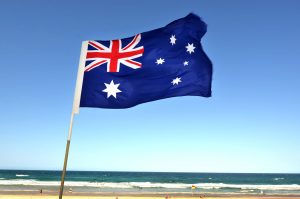
Australian flags are literally everywhere during Australia Day.
Most countries celebrate their nation’s inception during Independence Days, the time when they finally drove off foreign powers from their land. In Australia, they commemorate it by celebrating the time foreigners came into their land.
In 13 May 1787, a fleet of 11 ships commanded by Captain Arthur Philip landed ashore to establish the first British penal colony on Botany Bay, at the same time raising the flag of Great Britain at Sydney Cove.
Australia Day is the time of the year when Australians become more Australian. History and heritage are being celebrated. Flags are being waved and worn. Fun runs are being held. Twenty-one gun-salutes are being fired. There are barbecue parties, pride parades, costumed balls, and yes fireworks. Australian’s will find any excuse to have fireworks.

Hot Cross Buns are commonly eaten during Holy Week.
Aussies might always be partying and upbeat, but Holy Week is where things go lay low. Culminating on Good Friday, Holy Weeks is where people reflect, spend time with their families and friends (sans the partying), go on fasting, and pray.
Special church services and long prayer vigils are being held. Fish is being substituted to meat. Hot cross buns (small bread buns flavored with sugar and/or spices with a cross marking the top) are being eaten. Schools, post offices, shops, and most businesses are closed. Alcohol is tightly restricted also.
But still, some sporting events are being traditionally held on this time of the year, such as the Three Peaks Race in Tasmania, where people run, walk, and sail.

Egg hunts are still a popular game during Easter.
Australians are big when it comes to Easter. When most cultures end their Lent on Sunday, Aussies had to extend it until the next day. It’s basically the long weekend we all need, but only Australians apparently deserve.
Like in most countries, Easter is a reason to celebrate. Churches are lavishly decorated. Joyful songs echoes across the hall from the choir. There are chocolate eggs and Easter egg hunts, too.
On Easter Monday, business and school are still closed. It is the opportunity for people to spend time with their friends and relatives through reunions, family dinners, and community events.
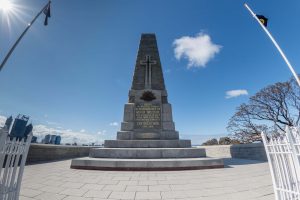
The State War Memorial in Perth, Western Australia.
Originally, this holiday is meant to honor only the members of Australian and New Zealand Army Corps, (or ANZAC, thus the name) who served and fought during World War I, battling the Ottoman Empire at Gallipoli, Turkey. But it was expanded to commemorate entirely all those who served in the military operations of the two countries. This is a rare occasion in which two sovereign nations celebrate the same holiday of remembrance.
The commemoration starts with the Dawn Service, in which people gather on the war memorials of each state or city with the chaplains, veterans, and dignitaries to offer a solemn and poignant tribute to those who courageously fought for the country. It usually ends with songs, flowers and prayers. You will never see a more stirring ceremony or remembrance other than this.

A young Queen Elizabeth as shown in an Australian stamp.
For the record, Queen Elizabeth II was born 21 April 1926, so the date of this holiday doesn't have anything to do with her actual birth date. Aussies celebrate whoever is the current monarch’s birthday ever since the late 1700s, and just moved the date to where it will be most convenient to them, regardless of what is written on the ruling king/queen’s birth certificate.
Like Easter, Queen’s Birthday is part of a three-day weekend. Shops and businesses are closed, and the roads are more congested than the usual, since people usually make holiday plans and go out of town. Public transport may decrease activity or not run at all. And yes, there are fireworks.

Labour Day Down Under is a three-day weekend
On 21 April, 1856, a group of building workers marched to Parliament House to make their plea heard: to be granted a fixed eight-hour working day with no loss of compensation or pay. Their call was heeded and became one of the very first organized workers in the world to achieve such privilege.
This inspired Labour Day celebrations around the world. A hundred years later, Australians commemorate this victory of the working class’ rights by… not working.
Like any three-day weekend, it is an opportunity for hardworking Aussies to sit back, relax, have barbecue with friends, drink wine, make holiday plans, travel, and spend time with loved ones.

There are no snow during the Australian Christmas, so sandmen are fairly common.
This may not need any introduction. Everyone in the civilized world knows Christmas. But we feel the responsibility to preface it. Because Yuletide down under is wildly different.
Christmas in Australia arrives during the beginning of summer season. Much like the rest of the world, Christmas trees (known as Christmas Bushes), lights, and the Nativity scene are a staple of the decorations. But this is where the similarities take a surprising halt.
Their Santa Clause, for one, is often depicted in pop culture as a bearded guy in a wide-brimmed hat, tank tops, shorts, and flip flops, riding a car pulled by kangaroos. Also, people build sandmen in the beaches, which is like a snowman, but made of sand.
But perhaps the largest event during this season is the Carols by Candlelight, which involves people gathering in a park, singing Christmas songs amid candle lights. And may feature performances from artists and celebrities.

Boxing Day all about gift giving. And mall sales.
If you expect crowds gathering around two blokes trying to beat each other to the pulp on Boxing Day, you’re in for a disappointment, mate.
Instead of trading punches, people exchange gifts or “Christmas boxes” on this holiday. Known as the ‘second Christmas,” this festivity was handed down to the Aussies by the Brits as part of their cultural influence.
But gift boxes aren’t the only ones flowing during Boxing Day, but shopping bags as well. Much like Black Friday in the United States, this Christmas Day sequel is also a time for sales and humongous discounts. Retailers would usually open as early as five in morning, clearing their gates for the long line of shoppers who mostly have been waiting since the wee hours of 26 December.
Much like the rest of the western developed world, Australia works on a multi-level of leadership and democracy. An odd combination of monarchy, parliamentary, and democracy working like a well-oiled machinery.
For some, this could be confusing, even an oxymoron of government category and functionality that is even impossible to exist. Here, we will dissect Australia’s political system and how it works.
A young Queen Elizabeth as shown in an Australian stamp.
As we have told you before, modern Australia was once a colony of Great Britain. Founded by the Empire as an exile destination for their ever growing number of prisoners, it worked hard to be a peaceful colony before being handed its sovereignty as an autonomous federal nation.
Autonomous, but not independent. The country is still part of the Commonwealth of Nations, countries which are former territories of the British Empire and still regards the British monarchy, currently reigned by Queen Elizabeth II, as the ruling queen.
This part is where the monarchist nature of Australia’s government ends, and where semi-modern democracy begins.
The Parliament House in Canberra, the capital of Australia.
As the prime element of Australia’s legislative branch, the Queen is represented by the Governor-General which serves as the de facto President and commander-in-chief of the country. The Queen appoints the Governor-General upon the nomination of the Australian Prime Minister.
Along with him is the Senate, the upper house of the country’s bicameral parliament. Each of the six states is represented by 12 senators (regardless of the population), making a total of 76 senators. After the reforms of March 2016, member of the senate will be elected through proportional voting system.
Completing this system of checks and balances is the House of Representatives of the lower house. This is composed of 150 members each representing electoral divisions or “seats”. These members are elected via preferential voting.
Australia isn’t just a monarchy, it’s a constitutional monarchy. Contrary to absolute monarchy, this form of government has the ruling power of the monarch restricted by the Australian constitution. And not just one constitution. The country has also six federal states, each one having their own constitution, barring each state from influencing, encroaching, and infringing each other. All in all, Australia has seven working constitutions.
Much like the rest of the democratic world, Australia operates on three levels of governmental functions, each one handling their own significant departments and affairs.
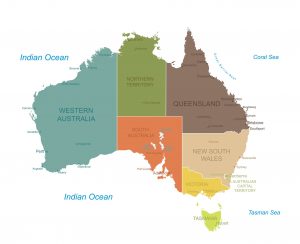
A map of Australia with its six states and other territories.
Headed by the Queen (represented by the Governor-General), the Upper House, and the Lower House, the Parliamentary Federal Government handles the Defense, Customs, Currency, and Immigration. It branches further more into three arms:
The Legislature – responsible for debating and voting new laws.
The Executive – In charge of enacting and upholding the laws instituted by the Legislature.
The Judicial – the government’s legal arm and in charge upholding the law.
Australia has six state governments; New South Wales, Victoria, Queensland, South Australia, Western Australia, and Tasmania. They each their own constitutions (save for the territories) and enact their own laws. They look after the police force, wildlife protection, schools, and hospitals.
Composed of boroughs, cities, towns, aboriginal shires, island councils, among other, there are a total of 561 local governments in the country. They enact their own by-laws and in charge of local functions such as town planning, garbage collections, libraries, and parking meter supervisions.
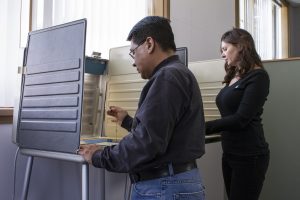
Elections in Australia are being held periodically to elect members of the legislature.
The Australian Parliament is the sixth oldest continuous democracy in the world, having hailed back to the beginning of the 1900s. And more importantly, it is the one of the best and most effective complete democracies in the world.
It is a country with an efficiently functioning government and outstanding culture of politics where civil liberties are duly and highly enforced and a competent electoral process. It has been this way for a century and will always be for many more.

